Read the bars before choosing an expensive action
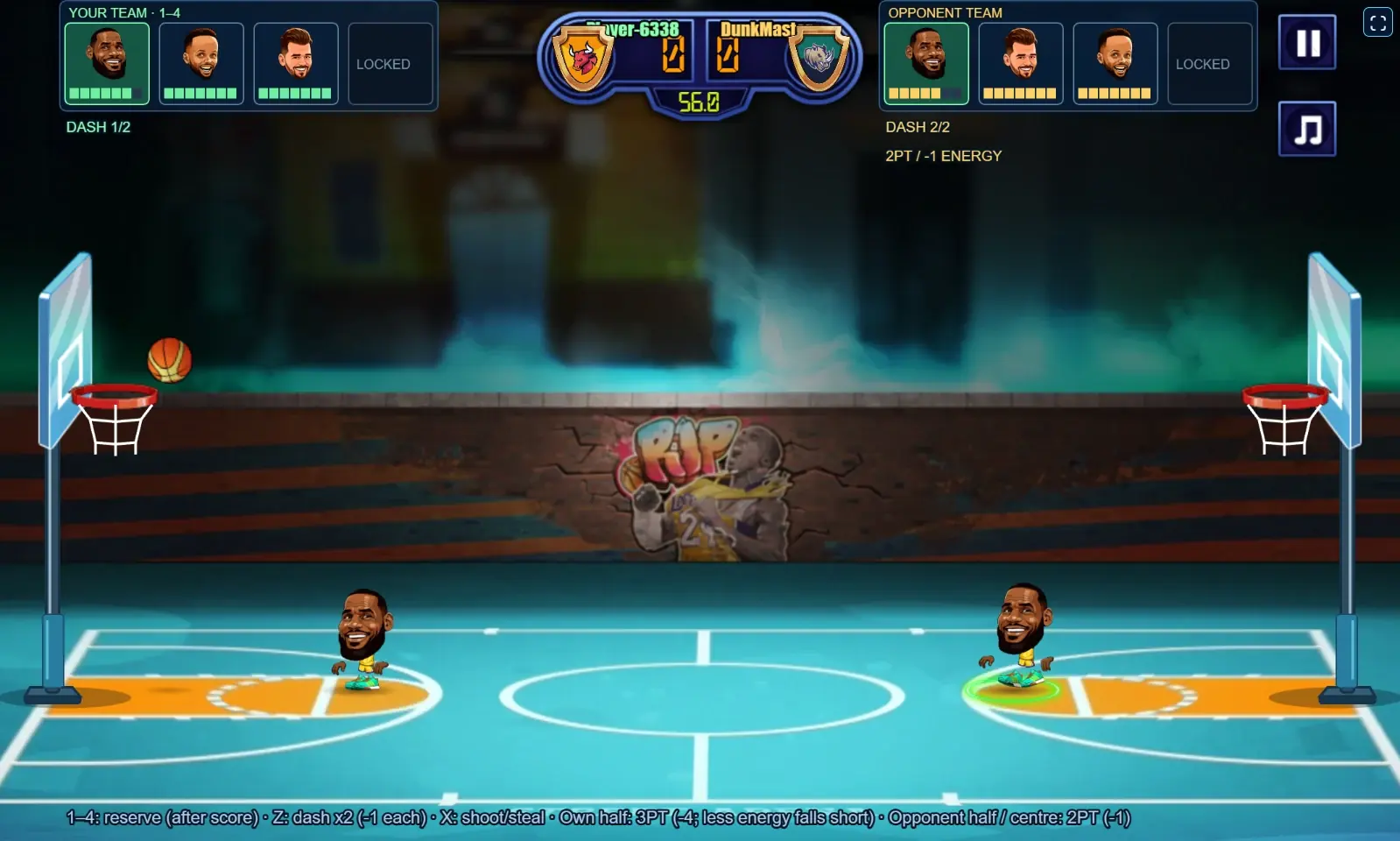
The portraits along the top of the court provide a quick view of your team’s energy. Their segmented bars make the remaining amount easier to compare than a single shrinking strip. Check the active player first, then look at the reserves before planning the next phase.
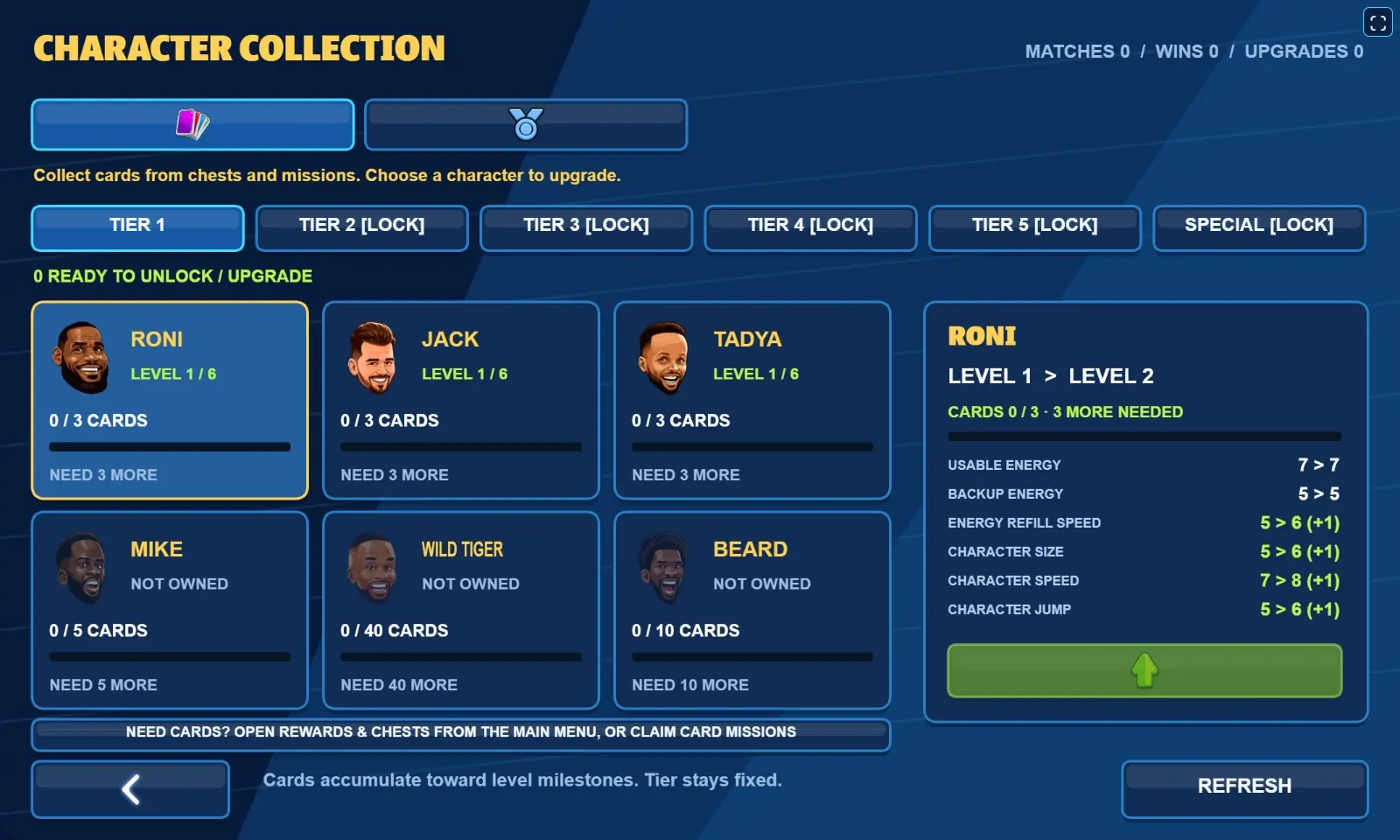
Energy belongs to individual characters. Usable energy, backup energy, and refill speed are listed in the character details, so two players do not necessarily sustain the same pattern of shots and dashes. Choosing a roster with those differences in mind is more useful than expecting every portrait to refill identically.
Three points depend on the release half, not the bar count
A regular attempt from your own half is worth three points if it scores, and a fully funded attempt costs four energy bars. A regular attempt from the opponent’s half is worth two points and costs one bar. Energy pays for the attempt; it does not turn a close shot into a three-pointer.
The current game assists the path of a fully funded four-energy three-point attempt, and opposing contact or a block can cancel that assistance. Defense still matters. With at least one bar but fewer than four, a long attempt can be released, spends the available energy, and is made to fall short. When energy is low, moving into a two-point position avoids that predictable miss.
A dash should earn enough space to justify its cost
A dash is most useful when its movement changes the possession. It can help you approach a loose ball, contest an opponent, or create a small separation. Because it consumes energy, using it without a reachable target can make an otherwise good shooting opportunity unaffordable.
The game supports two consecutive dashes when the character has enough energy and can perform the action. Release and press the dash input again to request the next dash rather than holding it and expecting an unlimited chain. Watch the bars after the first movement and decide whether the second one will actually improve your position.
Recovery follows the character and active match time
Recovery is governed by the character’s energy-related attributes and reserve state. The visible bars can return during active play when the character has the resources to recover. A larger refill attribute is worth comparing when you find that your preferred shooting pattern empties the same player too quickly.
Pausing does not give the team a free refill in the current game. Scoring resets also do not simply restore every character to full energy. That makes the energy remaining at the end of a possession relevant to the next one, even when play is about to restart.
Plan substitutions around the next score
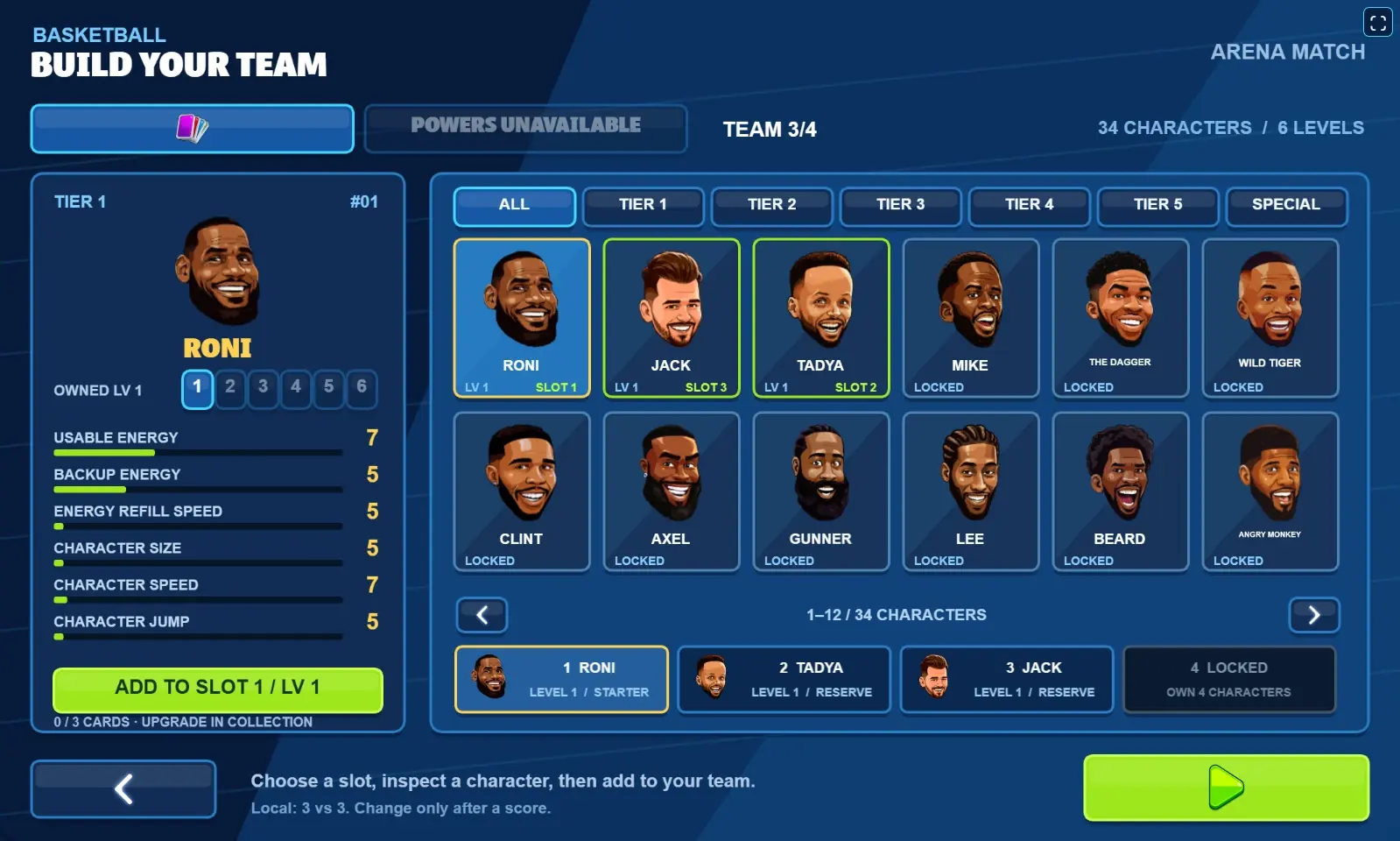
A reserve is a planned response to the next scoring reset, not an instant replacement during a live possession. Queue an eligible teammate and the change is committed after a score. If the active character is exhausted, the reset can select an eligible reserve with energy remaining.
A simple starting plan is to keep enough energy for your intended next shot, dash only when it changes the opening, and inspect the bench before the next restart. This approach makes energy management easier to learn without turning every possession into a calculation.
Frequently asked questions
Does four energy always mean a three-point shot?
No. The release half determines the point value. A fully funded regular shot from your own half costs four energy; a regular shot from the opponent’s half remains a two-point attempt.
Can I refill energy by pausing?
No. The current game advances energy recovery during active simulation time, not while paused or simply waiting through a scoring reset.
Put it into play.
In your next match, check the active player’s bars before every dash and every attempt from your own half.
Back to the courtAbout this guide: attribute tables and rules reflect the current game. Recommendations interpret those attributes; they are not measured win-rate rankings. Screenshots were captured from the game. Report a correction.