How to read these character profiles
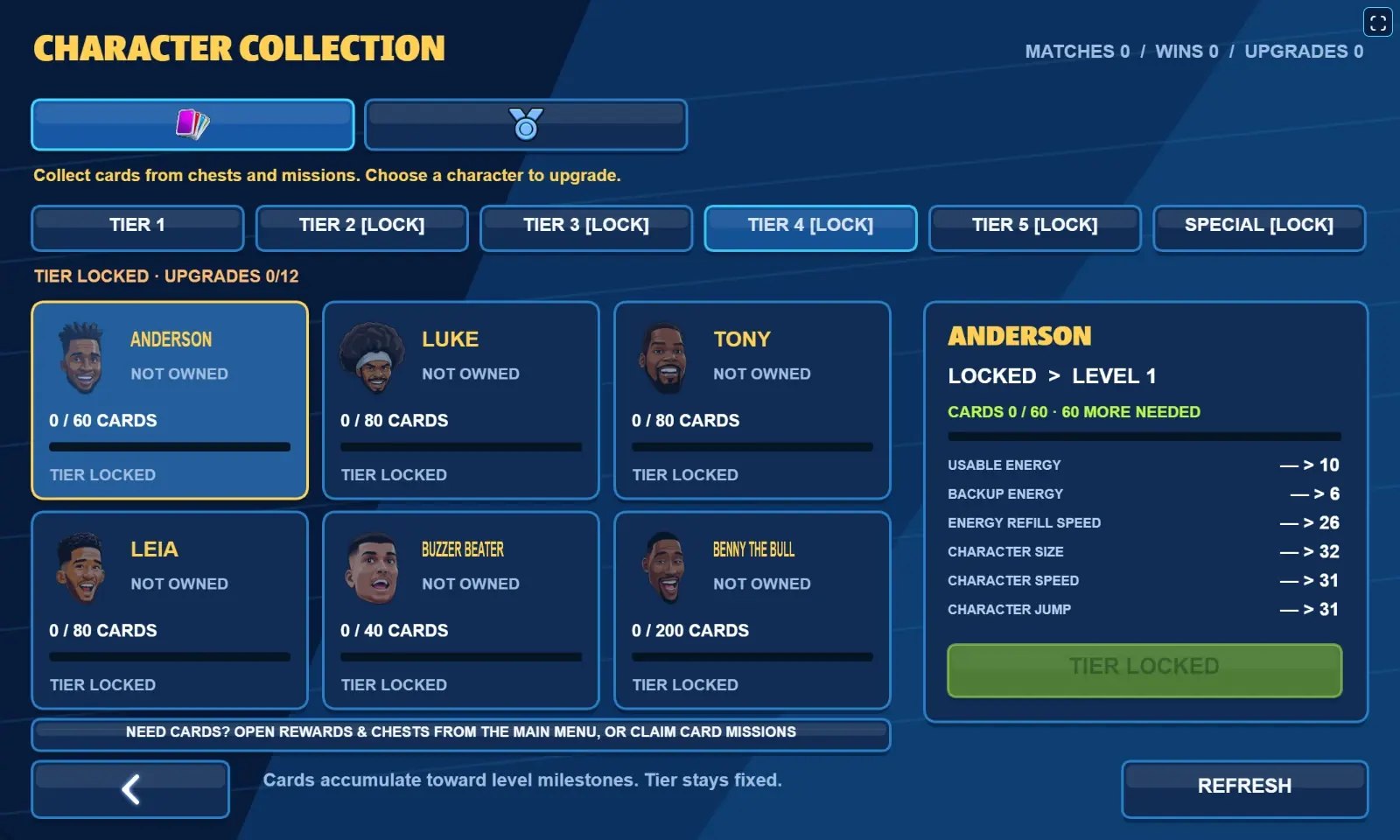
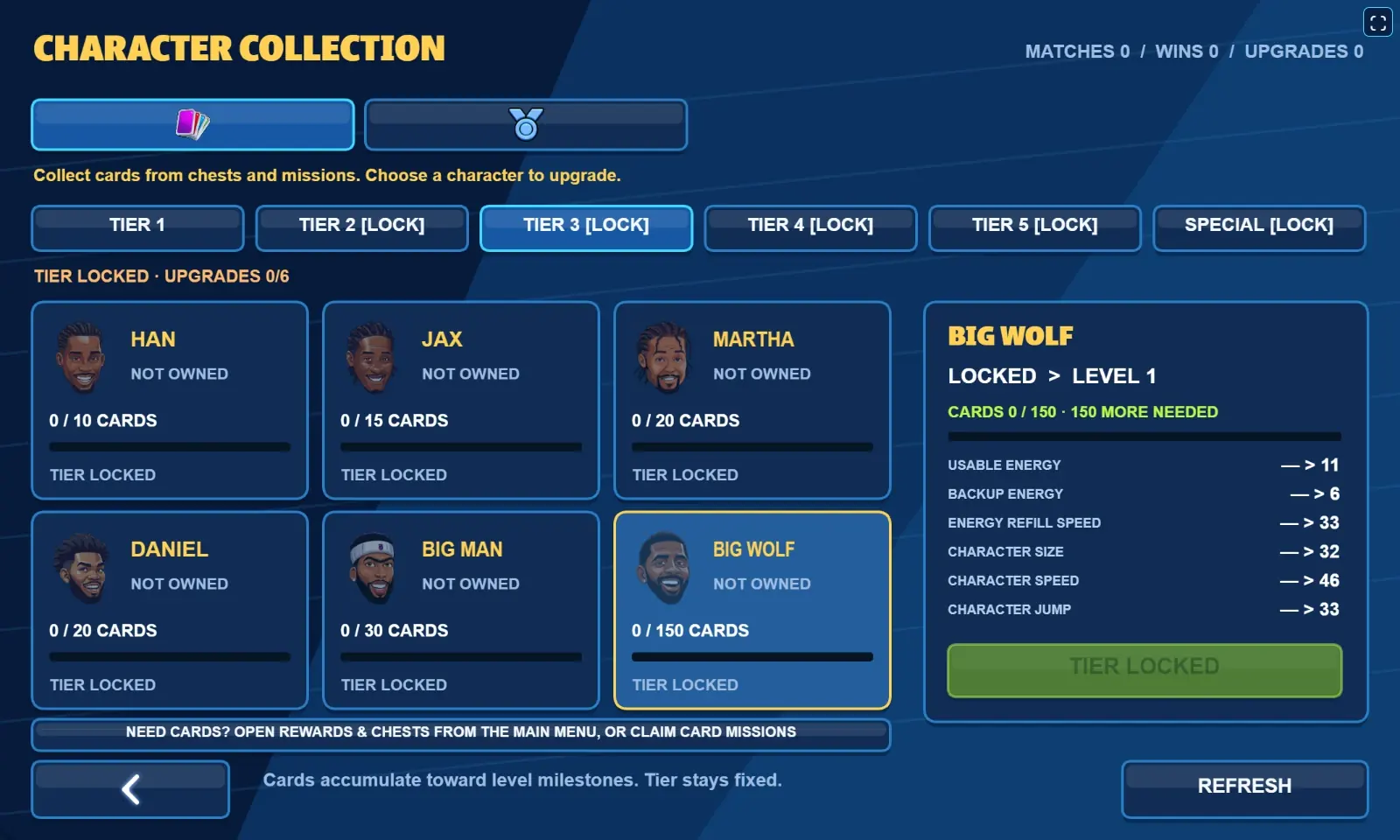
Tier 3 is opened after 6 total character unlocks or level upgrades. Opening a tier makes its characters eligible collection targets; it does not automatically give you every character in it. Roni, Jack, and Tadya are the three characters already owned on a fresh profile. Every additional unlock or level upgrade contributes one action toward the later tier gates.
The tables below show the current game catalog at all six levels. Usable and backup are energy counts; refill, size, speed, and jump are attribute ratings, not percentages, seconds, or guaranteed shot accuracy. Compare the same attribute between characters rather than adding unrelated ratings together.
Card gap means the absolute difference between this level’s catalog card marker and the previous marker; the level-one reference uses zero as its starting point. It is not a gold price or a total of every earlier row. The collection tracks accumulated cards and shows your progress toward the next step. Starter ownership can bypass an unlock requirement; the live card counter is the final check before upgrading.
The play recommendations interpret those ratings. Character names do not create exclusive skills, and the current match does not enable the collection’s locked power choices. Energy costs, shot position rules, and substitution timing are shared across the roster.
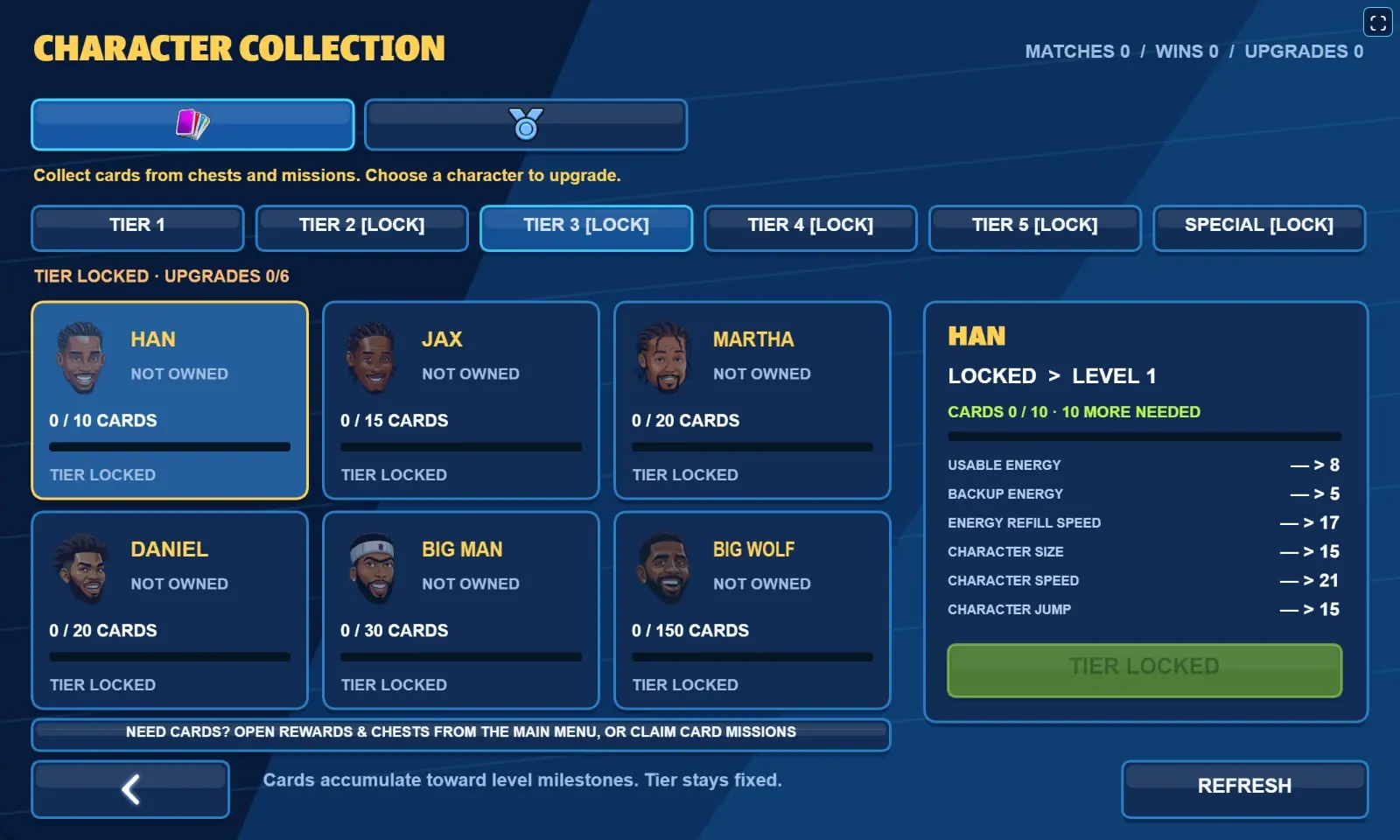
Han: profile and upgrade table
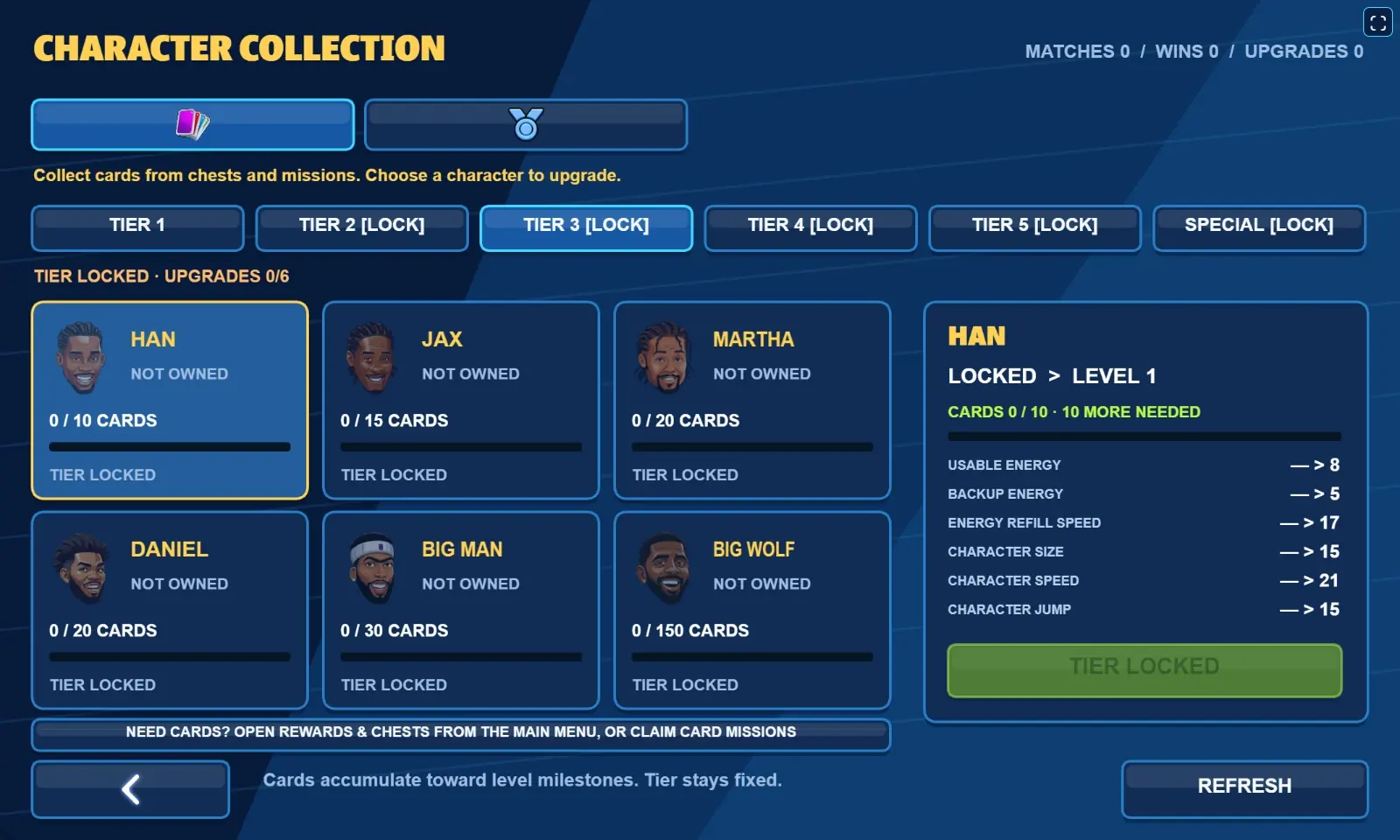
Han is a movement-led eight-energy option in Tier 3. His level-one speed is 21, compared with refill 17 and size and jump at 15. That gives him a different emphasis from Jax’s matching size and jump ratings, despite sharing the same usable and backup energy counts.
Try Han when your main issue is reaching a better shooting position. His energy still demands restraint: two four-bar shots leave nothing for a dash if recovery has not added more. A movement-focused profile works best when it helps you avoid wasting that energy in the first place.
| Level | Usable | Backup | Refill | Size | Speed | Jump | Card gap |
|---|---|---|---|---|---|---|---|
| 1 | 8 | 5 | 17 | 15 | 21 | 15 | 10 |
| 2 | 8 | 5 | 18 | 16 | 22 | 16 | 10 |
| 3 | 8 | 5 | 19 | 17 | 23 | 17 | 25 |
| 4 | 8 | 5 | 20 | 18 | 24 | 18 | 80 |
| 5 | 8 | 6 | 20 | 18 | 24 | 18 | 240 |
| 6 | 9 | 6 | 21 | 19 | 25 | 19 | 420 |
Jax: profile and upgrade table
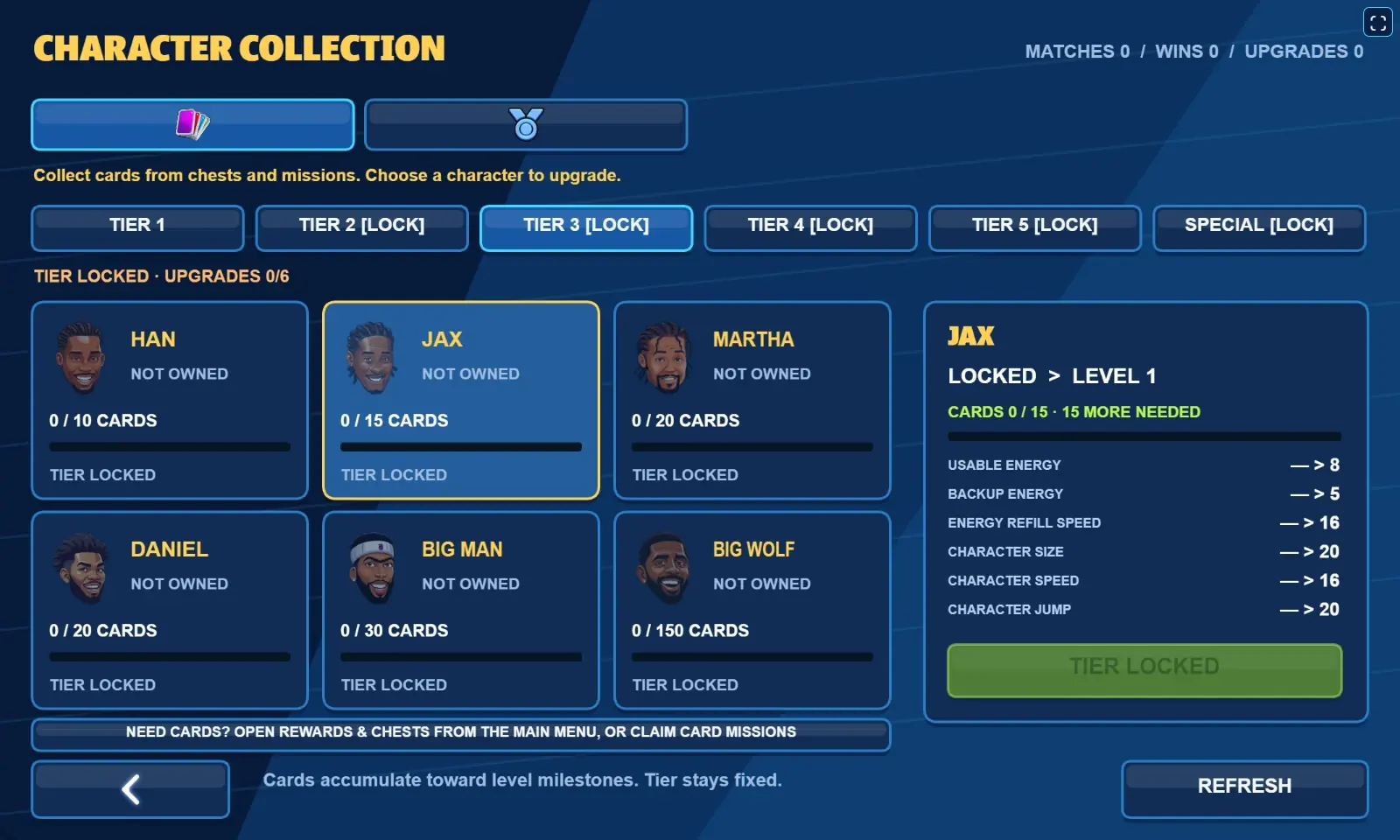
Jax combines size and jumping within an eight-energy Tier 3 profile. Both size and jump begin at 20, while speed and refill begin at 16. His starting energy counts match Han and Martha, making those three a useful group for comparing attribute emphasis without changing the initial energy pool.
Consider Jax when you want a different aerial and size balance from Han. A larger size rating is not proof of an automatic possession win, and jumping still requires timing. Use his level table to see how the same balanced size-and-jump emphasis develops through level six.
| Level | Usable | Backup | Refill | Size | Speed | Jump | Card gap |
|---|---|---|---|---|---|---|---|
| 1 | 8 | 5 | 16 | 20 | 16 | 20 | 15 |
| 2 | 8 | 5 | 17 | 21 | 17 | 21 | 10 |
| 3 | 8 | 5 | 18 | 22 | 18 | 22 | 20 |
| 4 | 8 | 5 | 19 | 23 | 19 | 23 | 80 |
| 5 | 8 | 6 | 19 | 23 | 19 | 23 | 240 |
| 6 | 9 | 6 | 20 | 24 | 20 | 24 | 420 |
Martha: profile and upgrade table
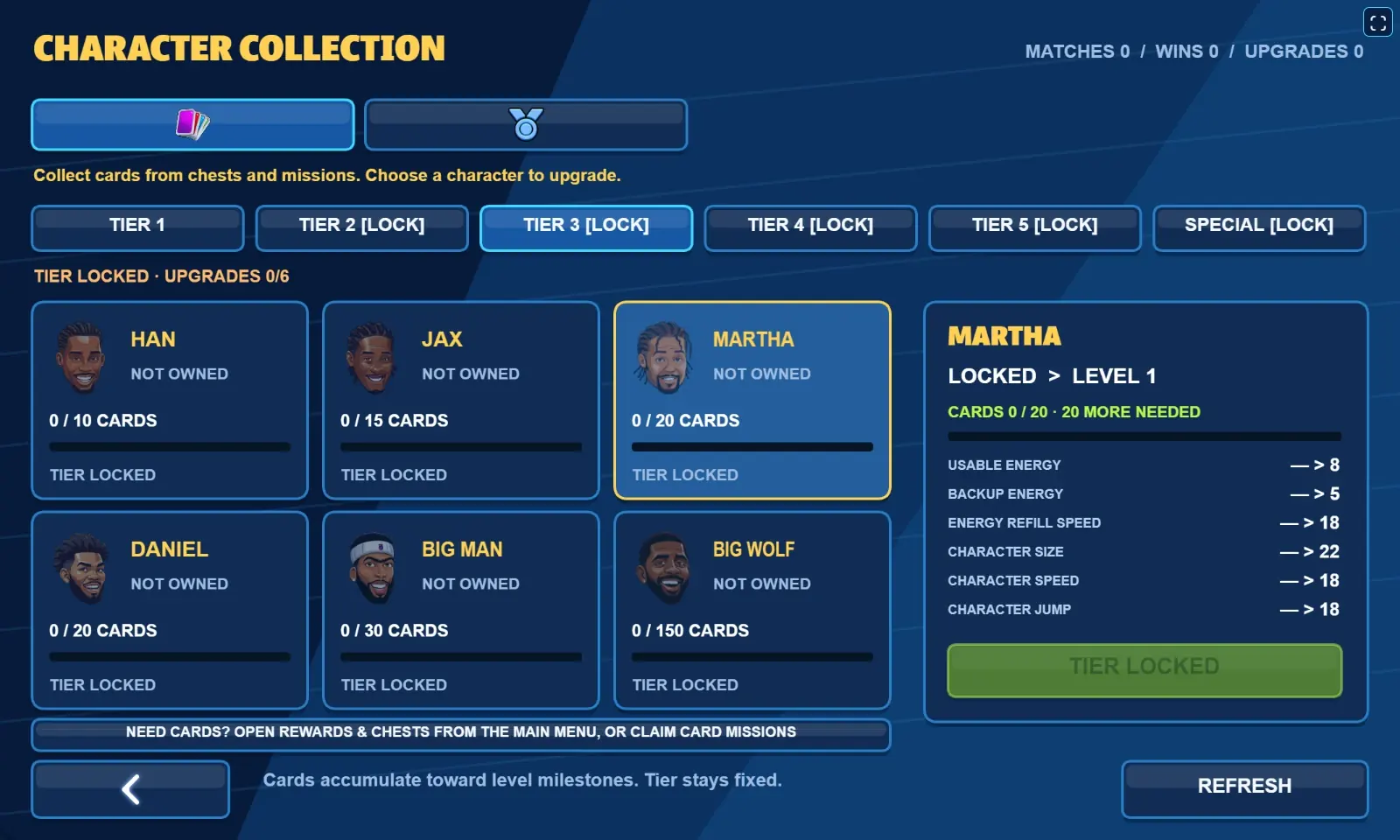
Martha favors size while keeping the other three movement-related ratings even. At level one size is 22, while speed, jump, and refill are all 18. Usable energy is 8 and backup energy is 5, the same opening resource counts as Han and Jax.
Martha is worth comparing when you want a size-led option without a sharp difference between movement and jumping ratings. Her upgrade sequence can support that balanced approach, but it does not remove the cost of repeated long shots. Check the reserve before using a second expensive possession.
| Level | Usable | Backup | Refill | Size | Speed | Jump | Card gap |
|---|---|---|---|---|---|---|---|
| 1 | 8 | 5 | 18 | 22 | 18 | 18 | 20 |
| 2 | 8 | 5 | 19 | 23 | 19 | 19 | 5 |
| 3 | 8 | 5 | 20 | 24 | 20 | 20 | 20 |
| 4 | 8 | 5 | 21 | 25 | 21 | 21 | 80 |
| 5 | 8 | 6 | 21 | 25 | 21 | 21 | 240 |
| 6 | 9 | 6 | 22 | 26 | 22 | 22 | 420 |
Daniel: profile and upgrade table
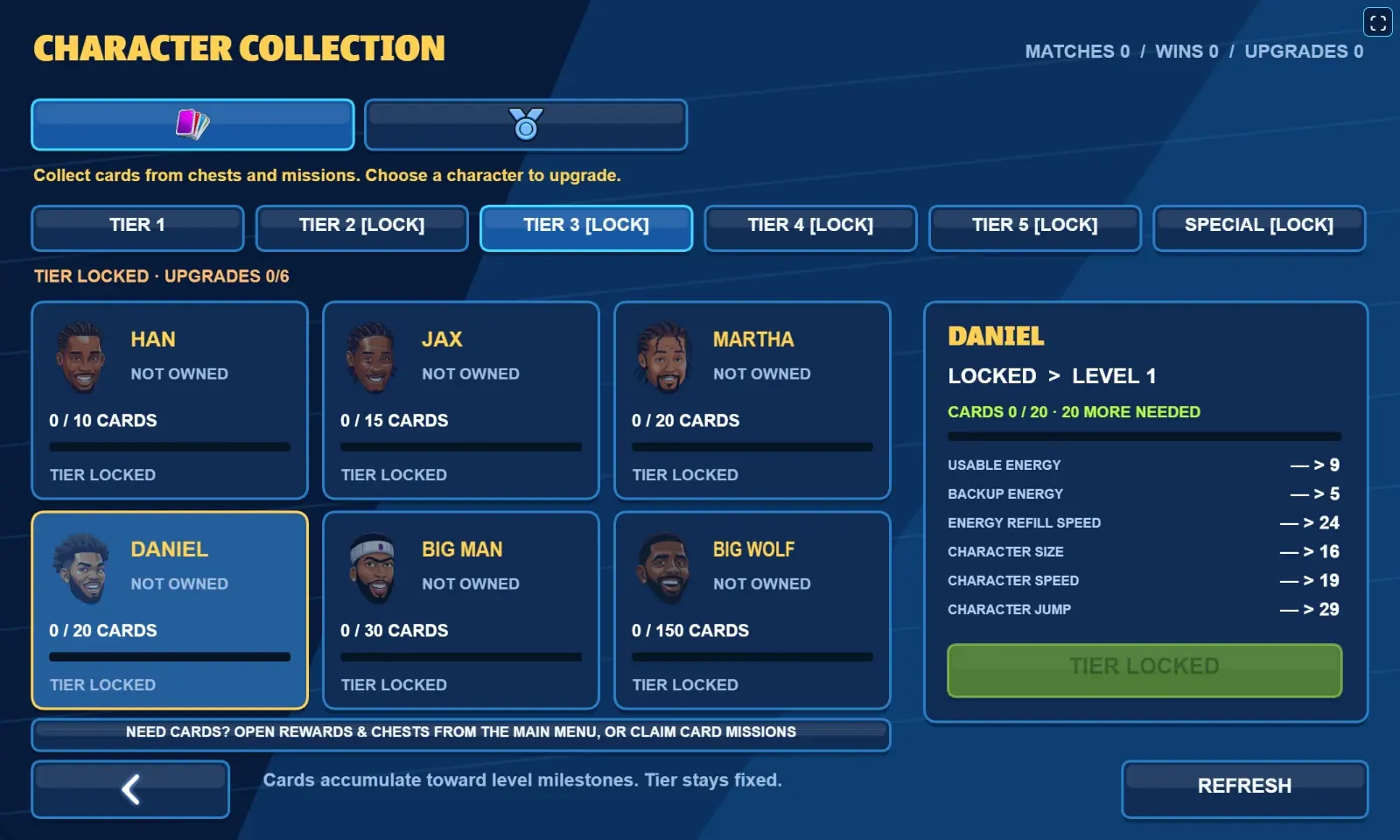
Daniel adds a ninth usable energy bar and a more jump-and-refill-focused profile to Tier 3. At level one, jump is 29 and refill is 24, while speed is 19 and size is 16. These numbers distinguish him from the eight-energy Han, Jax, and Martha group.
Compare Daniel when you need a little more energy margin and stronger jump/refill attributes rather than a larger size rating. His card progression differs noticeably from the other Tier 3 characters, especially at later levels. Read each next-level gap before estimating how many mission claims an upgrade will require.
| Level | Usable | Backup | Refill | Size | Speed | Jump | Card gap |
|---|---|---|---|---|---|---|---|
| 1 | 9 | 5 | 24 | 16 | 19 | 29 | 20 |
| 2 | 9 | 6 | 24 | 16 | 19 | 29 | 5 |
| 3 | 9 | 6 | 25 | 17 | 20 | 30 | 5 |
| 4 | 9 | 6 | 27 | 19 | 22 | 32 | 20 |
| 5 | 9 | 7 | 28 | 20 | 23 | 33 | 40 |
| 6 | 10 | 7 | 29 | 21 | 24 | 34 | 60 |
Big Man: profile and upgrade table
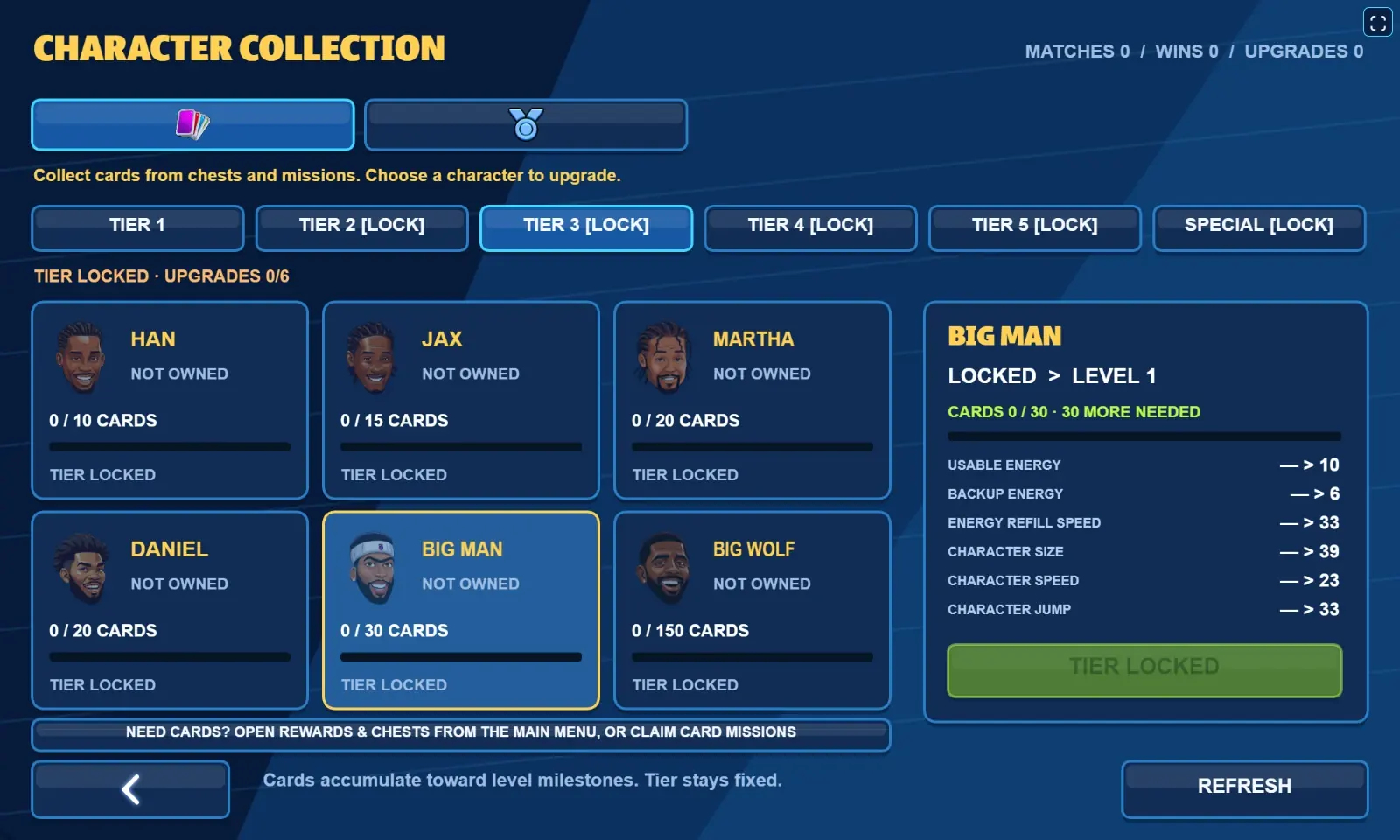
Big Man has a size-led Tier 3 profile with ten usable energy bars. At level one, size is 39, refill and jump are 33, and speed is 23. He is an alternative to Big Wolf when size matters more to your plan than the tier’s highest movement rating.
Big Man also has an unusual catalog card sequence: the level-three marker is lower than the level-two marker. The current game uses the absolute gap for that transition. Follow the displayed upgrade requirement rather than assuming the catalog markers always rise or that a lower marker makes the upgrade automatically free.
| Level | Usable | Backup | Refill | Size | Speed | Jump | Card gap |
|---|---|---|---|---|---|---|---|
| 1 | 10 | 6 | 33 | 39 | 23 | 33 | 30 |
| 2 | 10 | 7 | 34 | 40 | 24 | 34 | 5 |
| 3 | 10 | 7 | 36 | 42 | 26 | 36 | 5 |
| 4 | 10 | 7 | 38 | 44 | 28 | 38 | 80 |
| 5 | 10 | 8 | 39 | 45 | 29 | 39 | 240 |
| 6 | 11 | 9 | 39 | 45 | 29 | 39 | 420 |
Big Wolf: profile and upgrade table
Big Wolf is the fastest level-one character in Tier 3 by the displayed speed rating, at 46. Refill and jump are 33, size is 32, and usable energy is 11. That spread makes him a strong candidate for testing movement-led play within this tier, rather than simply copying Big Man’s size-led approach.
Eleven usable bars create room for two funded long attempts and some other spending, but that is still a finite possession budget. His card requirements are higher than the other Tier 3 options. A promising profile should be weighed against how soon you can actually unlock or upgrade it.
| Level | Usable | Backup | Refill | Size | Speed | Jump | Card gap |
|---|---|---|---|---|---|---|---|
| 1 | 11 | 6 | 33 | 32 | 46 | 33 | 150 |
| 2 | 11 | 7 | 34 | 33 | 47 | 34 | 10 |
| 3 | 11 | 7 | 36 | 35 | 49 | 36 | 20 |
| 4 | 11 | 7 | 38 | 37 | 51 | 38 | 80 |
| 5 | 11 | 8 | 39 | 38 | 52 | 39 | 240 |
| 6 | 12 | 9 | 39 | 38 | 52 | 39 | 420 |
Choose a role before choosing your next upgrade
Start with a problem you notice in matches. If you struggle to reach a release, compare jump and movement ratings. If you spend your usable energy before the next scoring reset, compare the usable and backup counts and review how you queue reserves. A larger rating cannot fix an input made from the wrong position.
Keep one familiar player in the lineup while testing a new character. Repeat the same short-shot approach, defensive jump, and own-half attempt so that the comparison has a clear purpose. An upgrade raises the catalog level within the same tier; reaching level six does not promote a character to another tier.
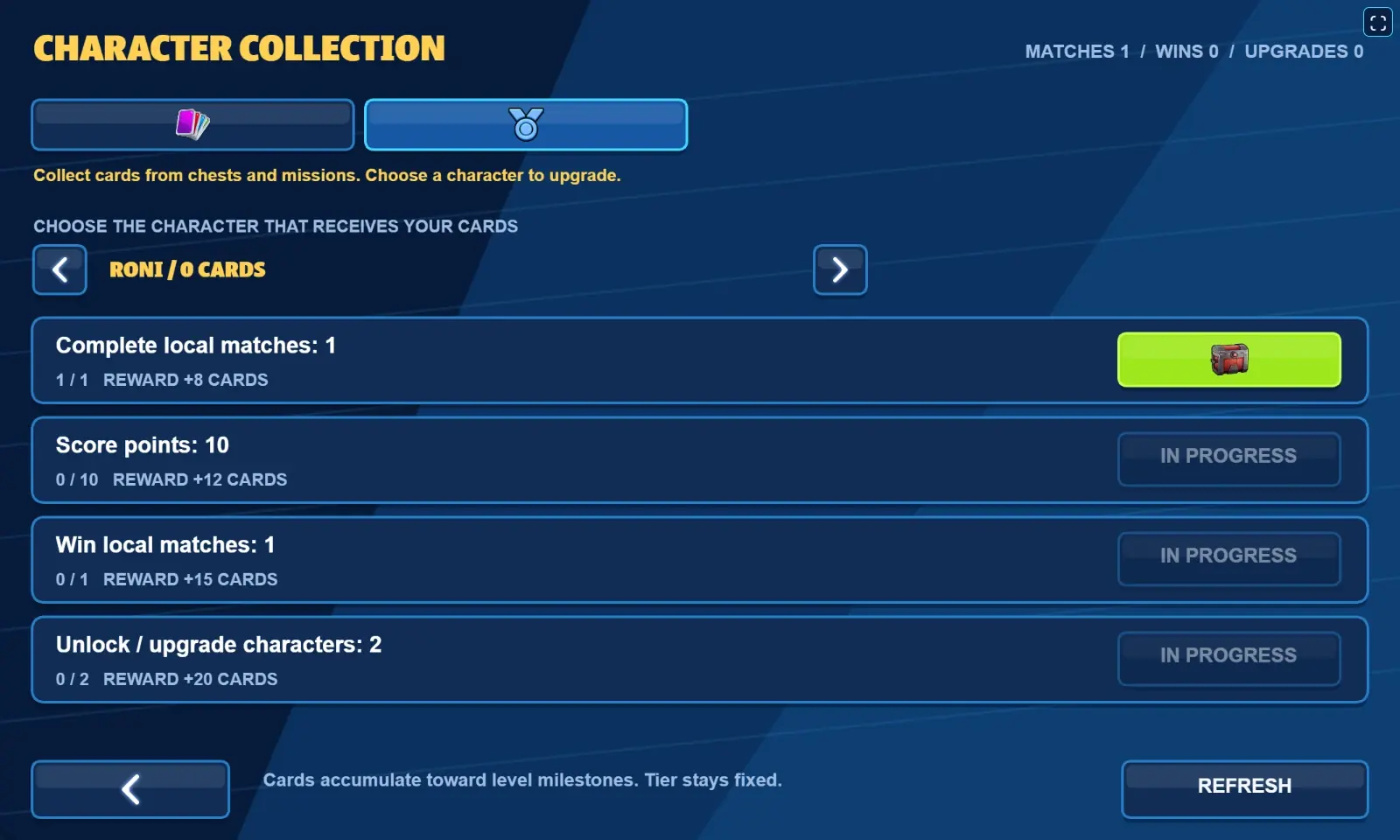
Assign mission cards to the character you intend to develop, then inspect the upgrade button. Splitting every reward across many characters can delay a useful unlock. Equally, raising one character does not fill the four-player roster: you need distinct owned characters for each usable position.
Frequently asked questions
Does opening Tier 3 unlock all its characters?
No. The tier gate controls access to those collection targets. Each character still has its own card requirement unless it is already granted as a starter.
Do the character ratings give an exact shooting percentage?
No. These are catalog attributes and energy counts. The current shot outcome also depends on court position, energy funding, and whether the attempt is blocked; a jump rating is not a shooting percentage.
Put it into play.
Open Characters, compare two profiles at the same level, and choose the next recipient before claiming mission cards.
Back to the courtAbout this guide: attribute tables and rules reflect the current game. Recommendations interpret those attributes; they are not measured win-rate rankings. Screenshots were captured from the game. Report a correction.